- Email: info@imadani.org
Where Muslims Must Stand: International Day of the World's Indigenous Peoples
The Muslim position must begin with a command from Allah: stand firmly for justice, even when doing so challenges our own interests, loyalties, families, or communities (Qur’an 4:135). We do not oppose oppression only when Muslims are its victims. We do not defend human dignity only when the people being harmed share our religion, ethnicity, or nationality. Justice in Islam is a duty, not a selective expression of sympathy.
That principle defines where Muslims should stand in relation to Indigenous peoples: beside communities whose lands were taken, whose treaties were broken, whose children were separated from their families, and whose cultures were targeted for erasure. Standing with them is not an imported political fashion. It follows directly from the Islamic obligation to resist zulm, protect human dignity, honor covenants, and care for the Earth as an amanah from Allah.
Every August 9, the International Day of the World’s Indigenous Peoples draws attention to Indigenous histories, cultures, contributions, rights, and ongoing struggles. For Muslims, the observance should be more than a ceremonial date. It should renew our commitment to justice and force us to ask whether we care about oppression when the people who suffered are not members of our family, faith community, or nation.
If the injustice began generations ago, do we still care? If acknowledging it disrupts a comfortable version of history, will we still listen? If the oppressed can offer us nothing in return, will we still stand beside them? The Muslim answer must be yes—not because solidarity benefits us, but because Allah commands justice.
Peoples, Not a Single People
Indigenous peoples are extraordinarily diverse. There is no single culture, history, or universal definition that can contain them all. In general, the term describes communities with historical continuity to pre-colonial societies, deep relationships with ancestral lands, distinct cultural and political institutions, and the right to identify themselves as Indigenous.
The United Nations estimates that about 476 million Indigenous people live across 90 countries. Together, they represent thousands of distinct cultures and speak a large share of the world’s roughly 7,000 languages. They include, among many others, the Diné and Sioux in the United States, First Nations and Inuit in Canada, Taíno peoples of the Caribbean, Sámi of northern Europe, Ainu of Japan, Māori of Aotearoa New Zealand, Aboriginal peoples of Australia, and Palestinians of the Levant.
This diversity matters. Solidarity begins by listening to people as they understand and name themselves, not by treating “Indigenous” as a single, romanticized identity. Yet across very different places, recurring patterns can be seen: land seizure, broken treaties, forced removal, attacks on language and culture, environmental exploitation, and the denial of political sovereignty and self-determination.
The Past Has Not Passed
Long before the United States existed, Indigenous nations governed themselves, maintained diplomatic and trade relationships, developed languages and legal traditions, and cared for lands and waters through knowledge accumulated across generations. Colonization did not merely arrive beside those societies; it displaced and attempted to reorder them.
Land was taken. Treaties were violated. Communities were forced onto reservations. Children were separated from their families and sent to boarding schools where their names, languages, religions, and cultural practices were suppressed. The U.S. Department of the Interior’s investigation found that the federal Indian boarding-school system operated 408 schools between 1819 and 1969. Its 2024 final report confirmed that at least 973 American Indian, Alaska Native, and Native Hawaiian children died while attending federal institutions or institutions receiving federal support.
These are not disconnected episodes sealed safely in the past. Indigenous nations still fight for the enforcement of treaties and the protection of sovereignty, land, water, and fishing rights. Communities continue to confront unequal access to healthcare, housing, education, voting, and basic infrastructure. Indigenous lands are still targeted for pipelines, mining, and other projects that can threaten water, sacred places, and community health. Indigenous women and girls continue to face a devastating crisis of disappearance and violence that has too often been met with indifference or fragmented investigations.
To learn this history is not to hate the United States or to accept personal blame for every past act. It is to reject comforting amnesia. Honest history is not an attack on us; it is an invitation to become more truthful, responsible, and just.
What the Muslim Stand Requires
The Qur’an commands believers not to let even their hostility toward a people lead them away from justice: “Be just; that is nearer to righteousness” (Qur’an 5:8). If justice remains obligatory even toward those we dislike, it is certainly obligatory toward people whose suffering has simply been ignored.
For Muslims, solidarity with Indigenous peoples is therefore more than an exercise in civic awareness. It is a test of Islamic character. Can we hear a painful history without becoming defensive? Can we acknowledge another community’s suffering without redirecting the conversation toward ourselves? Can we stand beside people who may never be able to repay us?
The Prophet Muhammad, peace and blessings be upon him, warned believers to fear the prayer of an oppressed person, even when that person is not Muslim, because there is no barrier between that prayer and Allah (Musnad Ahmad 12549). Oppression does not become less serious because its victim belongs to another religion or community. A person facing injustice is a human being created by Allah.
The same moral framework governs our relationship with the Earth. The Qur’an describes human beings as successors and trustees on Earth (Qur’an 6:165) and warns that corruption has appeared on land and sea through what human hands have done (Qur’an 30:41). Land is therefore not merely property, and nature is not merely raw material. Creation is an amanah, a trust.
Muslims need not romanticize Indigenous communities or assume that every community holds one environmental worldview. We can, however, recognize an important point of encounter: many Indigenous traditions understand land, water, community, ancestry, and responsibility as inseparable. Their defense of rivers, forests, sacred places, and future generations can deepen our own understanding of stewardship.
Palestine and the Test of Moral Consistency
The Palestinian struggle belongs within this moral field. The histories of Native nations in North America and Palestinians are not identical, and they should not be flattened into a single story. Each people has its own culture, history, legal position, and political claims. But refusing false equivalence does not require us to ignore recognizable patterns of dispossession: the seizure of land, forced displacement, the destruction of homes and communities, restrictions on return, and pressure against a people’s ability to remain rooted in its homeland.
That consistency is urgently needed. In July 2026, the UN Office for the Coordination of Humanitarian Affairs reported that military operations, insecurity, movement restrictions, and repeated displacement continued to deepen humanitarian needs in Gaza. A 2026 assessment by the United Nations, European Union, and World Bank estimated that around 1.9 million Palestinians had been displaced, many repeatedly, and that more than 60 percent of Gaza’s population had lost their homes.
Muslims are right to care deeply about Palestine. But the ethical force of that commitment grows when it teaches us to recognize dispossession elsewhere as well. If we oppose the forced displacement of Palestinians, we should be able to hear the pain of Indigenous nations displaced from their lands in North America. If we defend the right of Palestinians to preserve their culture, memory, and community, we should defend those rights for other Indigenous peoples. And solidarity with Indigenous nations here should never be used to make Palestinian suffering invisible.
Our standard cannot be a political party, nationality, ethnicity, or emotion. It must be justice. Moral consistency turns solidarity from a slogan into a principle.
How Muslims Turn Principle Into Action
The Muslim stand cannot remain a sermon, statement, or annual commemoration. Meaningful solidarity does not begin with speaking for Indigenous peoples. It begins with listening, learning, and acting alongside them.
First, learn whose traditional lands you live on and which Indigenous nations remain present in your region. Study their histories through sources produced by the communities themselves. Teach children that the country they inherit is capable of both achievement and injustice, and that truthfulness is a form of care rather than betrayal.
Second, listen to Indigenous voices before forming conclusions. Support Indigenous journalists, writers, filmmakers, educators, organizations, and businesses. Do not reduce living nations to a historical footnote or a land acknowledgment recited without relationship or action.
Third, defend sovereignty and the fulfillment of treaties. Pay attention to local struggles over land, water, fishing rights, voting access, healthcare, housing, education, and environmental protection. Learn about the crisis of Missing and Murdered Indigenous Women and Girls, and amplify the work of Indigenous-led organizations responding to it.
Fourth, practice stewardship. Challenge projects and habits that sacrifice vulnerable communities and ecosystems for short-term gain. Caring for creation is not an optional political identity; it is part of honoring the trust Allah has placed upon humanity.
Finally, Muslim organizations, mosques, and families should support public remembrance that tells the truth. Indigenous Peoples Day and the International Day of the World’s Indigenous Peoples can create visibility, but commemoration must lead to sustained relationships, policy reform, and accountability throughout the year. Allah commands justice, excellence, and generosity, and forbids wrongdoing and oppression (Qur’an 16:90). The test is not whether we can demand justice when we are the victims. The test is whether we can defend it when someone else’s story is being ignored.
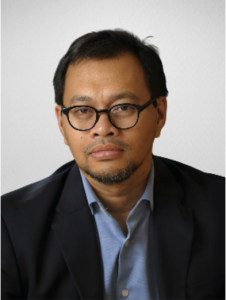
May Allah make us people who listen before speaking, who acknowledge truth even when it is uncomfortable, who care for the Earth as a sacred trust, and who stand with oppressed people everywhere – not because solidarity benefits us, but because justice is what Allah commands. (Dr.Aria Prima Novianto – President of IMSA)
Copyright 2026, All Rights Reserved
Leave Your Comments